
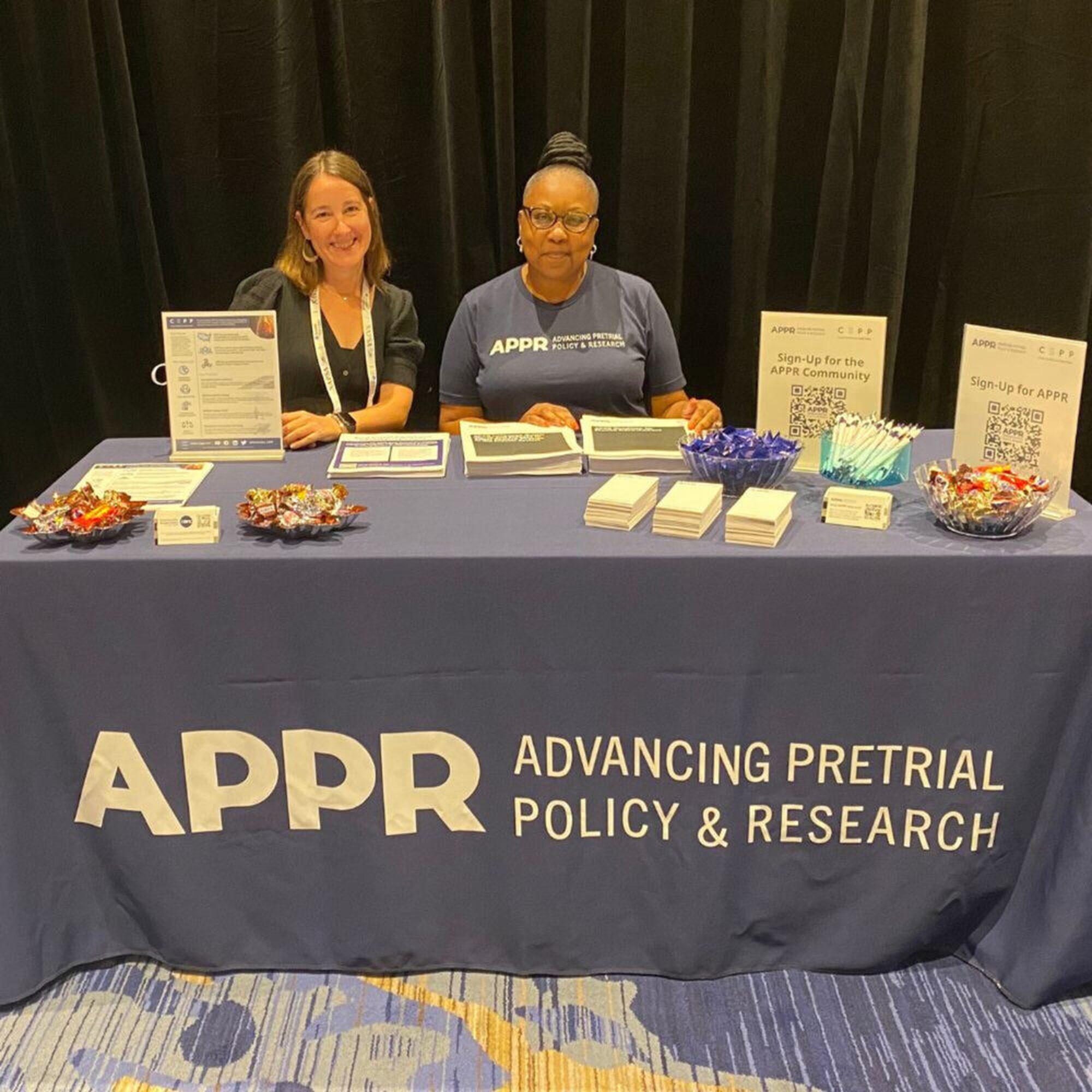
Who We Are
The Center for Effective Public Policy (CEPP) leads all APPR activities. CEPP is a nonprofit organization that addresses issues across the criminal legal system, including parole and probation, justice-involved women, reentry and reintegration, and more.
Our Mission & Vision
We seek to achieve fair, just, equitable pretrial practices that positively impact people, systems, and communities. APPR’s mission is to support and engage pretrial professionals and community members in the meaningful delivery of data-informed pretrial justice.
APPR Core Principles
APPR is guided by the following core principles:
- Pretrial decision making honors and operates consistently with both the presumption of innocence and the presumption of liberty [1]
- Everyone (the person charged, the victim, community members, and system stakeholders) is treated with dignity and respect.
- Pretrial systems generate equitable outcomes for all people; all efforts to enhance pretrial justice include deliberate strategies to eliminate racial, ethnic, gender, and economic disparities.
- System and community stakeholders collaborate to identify and implement strategies and services that help people meet their needs and succeed during pretrial release, while also prioritizing the safety and well-being of victims and the community.
- Pretrial policies and practices are grounded in research and refined through experience and ongoing performance measurement.
- APPR Core Principles, Values, and Goals DOWNLOAD PDF
What APPR Does
We help communities increase their capacity to implement fair, effective, and data-driven pretrial justice practices. We’re expanding our approaches to advance pretrial justice while continuing to provide training, resources, and technical assistance to the field.